

NVIDIA GB200 NVL72 Infrastructure and MPO-8 APC Cabling for Scalable Units
Deconstructing the cabling architecture of a Blackwell Scalable Unit (SU), where 8 racks converge into 9,216 active fiber strands.
The DGX GB200 Scalable Unit (SU) represents a big shift in data center architecture. The SU is a unified 576-GPU entity interconnected by 9,216 active fiber strands. ScaleFibre provides the precision terminated trunks required to manage this density.
The 4 Physical SuperPOD Fabrics
NVIDIA segments the SU into distinct physical layers to isolate GPU traffic.
MN-NVL (NVLink 5)
Scale-UpThe ‘internal’ rack network connecting 72 GPUs at 1.8 TB/s.
- Zero Optical Fiber
- Passive Copper Backplane
- Blind-mate connectors
Compute InfiniBand
Scale-OutThe primary ‘East-West’ fabric for massive multi-node training.
- 4,608 active fibers per SU
- Rail-optimized topology
- Quantum-3/Quantum-2
Storage & In-Band
FrontendEthernet-based fabric for high-speed data ingestion and provisioning.
- 5:3 Blocking factor
- BlueField-3 DPU offload
- VXLAN/RoCE support
OOB Management
Control PlaneThe isolated network for hardware telemetry, BMC, and PDU management.
- RJ45/Cat6 Copper
- SN2201 Switch tier
- Physical air-gap security
Exascale SU Metrics
An 8-rack Scalable Unit represents the fundamental building block of the NVIDIA AI Factory.
9,216
Active Fibers per SU4,608
Compute-Only Strands5:3
Storage Blocking Ratio400G/800G
Native Port Speeds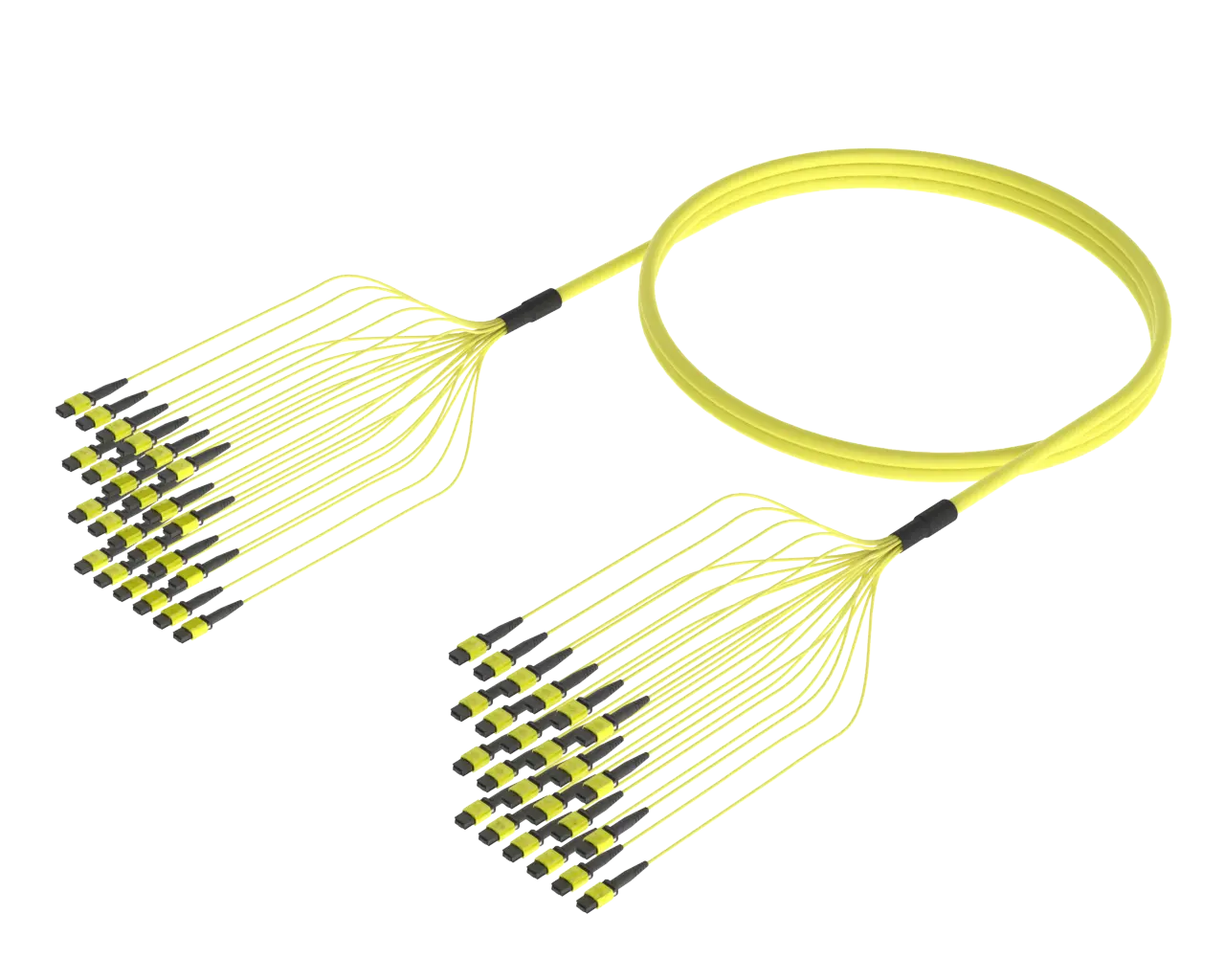
High Fibre Count MPO Trunk Cables
High-count MPO trunk cable up to 288 fibres. Compact, lightweight, and perfect for backbone installs in hyperscale or enterprise datacentre.
View High Count MPO Trunk DetailsThe Three Levels of SU Connectivity
Level A: Server-to-Leaf
1,152 fibers per rack using high fibre count trunks or jumpers to connect NVL72 nodes to Leaf Switches.
Level B: Leaf-to-Spine
Aggregating rail-aligned traffic within the SU using 1:1 non-blocking links for compute.
Level C: Spine-to-Core
Scaling beyond the SU to a centralized Core area using high-count trunks.
Legacy Patching (Point-to-Point)
- ✕Manual Complexity: Requires 9,216 individual patch cords per 8-rack block.
- ✕Airflow Obstruction: Dense cable bundles block liquid-cooling exhaust paths.
- ✕Risk Profile: High probability of ‘crossed rails’ during manual 1:1 patching.
- ✕Deployment Time: 115+ hours for manual routing and labeling per SU.
Modular High Fibre Count Trunking
- ✓Plug-and-Play: Consolidates thousands of fibers into pre-terminated 128F/144F/256F/288F/576F tailored trunks.
- ✓Thermal Optimization: Small-diameter cables maximize airflow in dense racks.
- ✓Pathway Efficiency: Consolidates 1,152 active fibers per rack into high-count MPO backbones.
- ✓Installation Profile: Rapid deployment via pre-terminated factory-tested assemblies.
Active Fiber Growth: Node to Full SuperPOD
Cabling ComplexityScalable Unit Visualized
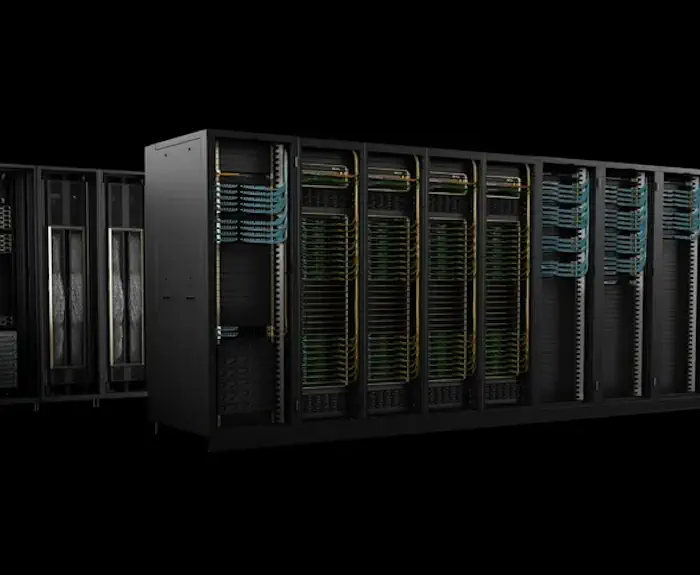
The 8-Rack Compute Block
An NVIDIA GB200 SU (Scalable Unit) consists of 8 racks, each housing a DGX GB200 NVL72 system with 72 GPUs.
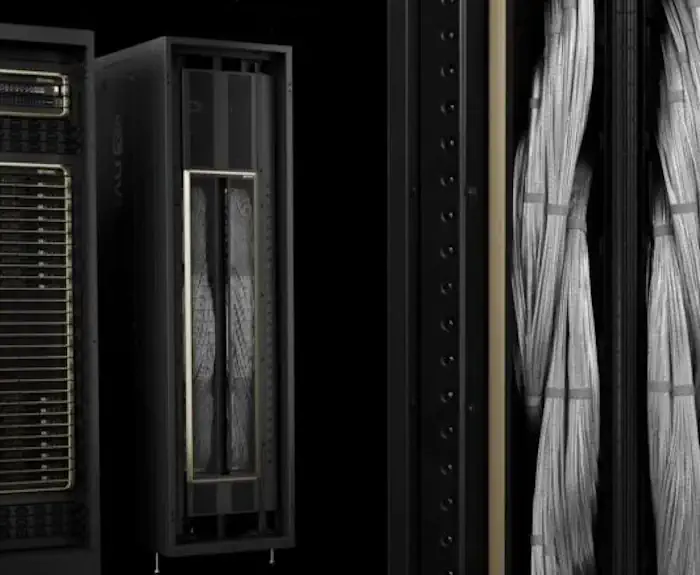
High Fibre Count Trunk Distribution
Consolidating thousands of rack fibers into high-density trunks for airflow clearance, rapid installation and minimal pathway usage.
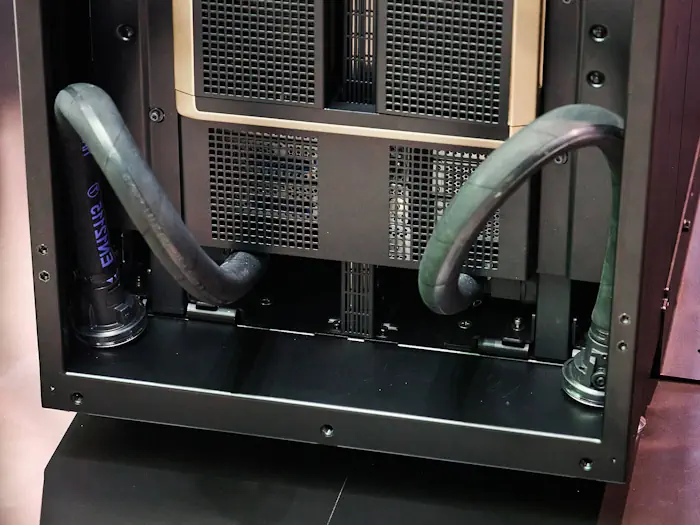
Liquid Cooling
Liquid-cooled cold plates stabilize the tray environment, allowing OSFP transceivers to shed heat effectively via riding heat sinks.
Technical FAQ
Architect Your AI Factory
ScaleFibre delivers pre-terminated cabling solutions for NVIDIA DGX SuperPOD deployments.
Get in TouchGet detail on high fibre count trunks for your NVidia DGX SU.